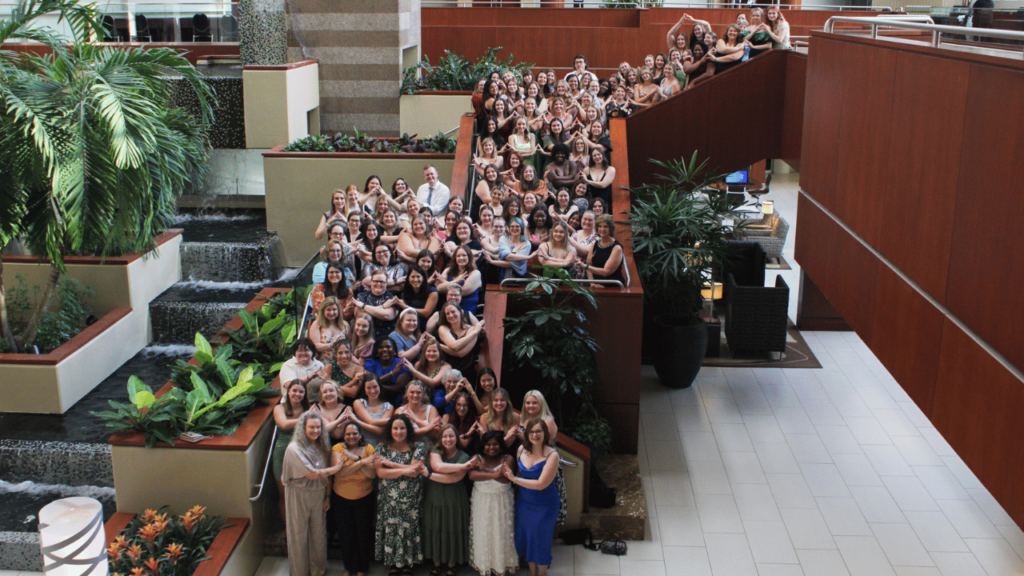
Omega Phi Alpha reported 48,630 service hours during the 2024–2025 academic year. Through its partnership with Gift of Life Marrow Registry, its members also recruited thousands of potential donors, helping produce documented matches and blood stem cell transplants.
Those are not just volunteer photos. They are records of time given and people reached.How much service did Omega Phi Alpha complete?
Omega Phi Alpha is a national service sorority founded in 1967. The organization centers its membership experience on friendship, leadership and service through collegiate chapters and an alumni community.
According to its official 2024–2025 report, chapters completed 22,390 service hours in fall 2024 and 26,240 hours in spring 2025. That adds up to 48,630 hours during one academic year.
Nine chapters exceeded 1,000 hours in the fall. During the spring, nine chapters exceeded 1,000 hours and two exceeded 2,000.
The Alpha Rho Chapter at Virginia Tech recorded 4,488 hours across the two semesters, earning Omega Phi Alpha’s National Service Award. Shekaina Jimenez of the Alpha Omicron Chapter at the University of Florida recorded 153.5 hours and received the Individual Service Award.
Those details matter because a national total can hide the people doing the daily work. Naming chapters and members gives credit where the work happened.
What happened through the Gift of Life partnership?
Gift of Life Marrow Registry connects volunteer blood stem cell and marrow donors with children and adults facing blood cancers, sickle cell disease and certain immune disorders.
Omega Phi Alpha’s 2024–2025 report states that its chapters recruited 2,875 new registry participants. At the time of that report, those efforts had resulted in 47 matches and three transplants.
The partnership has continued growing. The official Omega Phi Alpha Donor Circle maintained by Gift of Life listed 4,639 swabs, 75 matches and four transplants when checked on August 29, 2026.
A registry match does not guarantee that a transplant will occur. Medical eligibility, timing and a patient’s condition can affect what happens next. That is why matches and completed transplants should be reported separately.
Both numbers still matter. Every new registrant increases the chance that a patient may find a compatible donor.
One member helped connect the organizations
The partnership has a personal starting point.
Omega Phi Alpha credits Brianne Dollar, a member of its Alpha Delta Chapter at Georgia Southern University, with helping organize the relationship. Dollar survived acute myeloid leukemia after receiving a transplant from a matching donor.
Her experience became part of a national service opportunity. The partnership announcement documents how Omega Phi Alpha and Gift of Life began working together, while Gift of Life lists the sorority among its official organizational partners.
This is what member-driven impact can look like. One person’s lived experience helped create an organized way for chapters across the country to act.
What comes next?
At its 2026 National Convention in Richmond, Virginia, Omega Phi Alpha announced its 2026–2027 President’s Project, Paving Pathways for Education.
The project asks members to support local educational needs through tutoring, mentoring, literacy programs, library events, school activities, book collections and classroom supplies. Chapters are encouraged to speak with schools, libraries, educators and youth organizations before deciding what their communities need.
Because the project has just begun, its results cannot be measured yet. The current story is the commitment and plan, not a completed outcome.
The real follow-up will be whether the organization documents participation, community partners, supplies, hours and educational results as clearly as it recorded its prior service.
The Gold Standard of Excellence
GLOs United recognizes Omega Phi Alpha members, chapters, alumni volunteers and community partners for treating service as a consistent membership practice.
The numbers make the work visible. The marrow-registry outcomes make the stakes clear. The next education project creates another chance to turn national coordination into local action.
Is your organization tracking service, partnerships and results that people should know about?
Submit your impact story