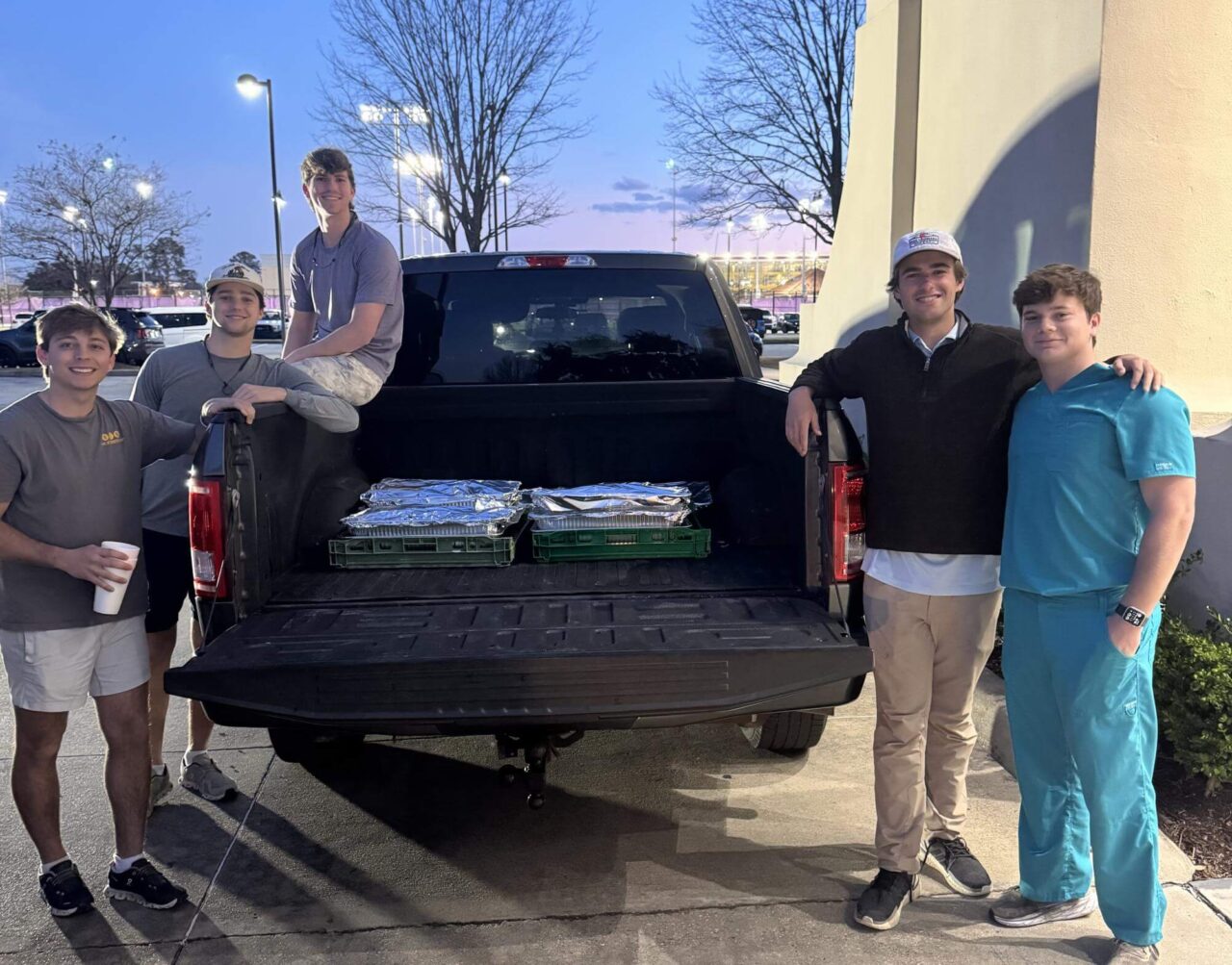
Giving Greek, a student-run organization founded by Louisiana State University graduate William ‘Will’ Grand, has redirected more than 10,000 meals to St. Vincent de Paul in Baton Rouge. The program collects surplus prepared food from fraternity and sorority houses and delivers it to people experiencing hunger.
The project turns two problems into one organized response. Usable food is kept from being discarded, and an established community partner receives meals for local distribution.How did Giving Greek begin?
Grand developed the idea while he was an LSU junior and a member of Kappa Alpha Order.
He noticed prepared food being thrown away after meals at fraternity houses and contacted St. Vincent de Paul to ask whether the organization could accept it. That question led to a continuing food-recovery program involving students from LSU fraternities and sororities.
A July 31, 2026, recognition from U.S. Senator Bill Cassidy's office confirms that Giving Greek has donated more than 10,000 meals to the Baton Rouge shelter.
Giving Greek's official website describes its mission as collecting meals from fraternities and sororities and directing them to people experiencing homelessness.
July 2026 Giving Greek recognition · Giving Greek official website
How did the project grow?
The public record shows measurable growth.
Kappa Alpha Order reported in March 2025 that Giving Greek had donated more than 6,000 meals during its first two years. By July 2026, the reported total had passed 10,000 meals.
The available sources do not provide an exact current total, the number of participating chapters, or a chapter-by-chapter contribution record. The public figure should therefore remain ‘more than 10,000 meals.’
That limitation does not weaken the confirmed result. It prevents a verified minimum from being turned into an unsupported exact number.
What does the program do each week?
Greek-letter volunteers collect extra prepared food and deliver it to St. Vincent de Paul.
The program depends on fraternity and sorority houses with surplus food, students who organize collection and transportation, Giving Greek's continuing student leadership, St. Vincent de Paul staff and volunteers, and community members who receive meals.
The project also expanded into other forms of assistance. Senator Cassidy's office reports that volunteers organized Christmas toy drives and distributed blankets during hard freezes.
Those activities remain separate from the meal count. The 10,000 figure refers to donated meals, not toys, blankets, volunteer hours, or the number of individual recipients.
What happened after Grand graduated?
Grand continued helping organize volunteers after leaving LSU. He also transferred day-to-day leadership to younger students.
That succession is an important part of the story. Student organizations can disappear when a founder graduates if procedures, relationships, and responsibility are not transferred to the next group.
Giving Greek's continuation indicates that the work became larger than one student's original observation. Grand remains involved, while newer students have an opportunity to operate and expand the program.
The public sources do not identify every current student leader. Their names should be added only when Giving Greek or LSU provides a confirmed leadership list.
Why does Giving Greek matter to the Greek-letter ecosystem?
Fraternity and sorority houses purchase and prepare food on a scale that can create recurring surplus. Giving Greek treats that surplus as a resource that can be responsibly redirected through a community partner.
The model also gives chapters a shared service activity. Participants do not need to belong to the same organization or council to contribute food, transportation, planning, or volunteer time.
The program began with observation. Grand noticed a repeated problem, asked whether a local organization could use the food, and helped establish a process around the answer.
That is a practical form of Greek-letter leadership. It identifies an available resource, brings organizations together, and places the community partner at the center of delivery.
What should future reporting include?
Future Giving Greek reports could document the exact reporting period for each meal total, participating houses and chapters, pounds of food recovered, weekly or monthly meal totals, volunteer participation, food-handling procedures, receiving organizations, partner-confirmed results, and expansion to other campuses.
Those details are not fully available in the current public sources and should not be estimated.
The verified record remains clear: a project that began with surplus food at LSU has redirected more than 10,000 meals to a Baton Rouge community organization.
The Gold Standard of Excellence
GLOs United recognizes Will Grand, Giving Greek's student leaders and volunteers, participating LSU fraternities and sororities, Kappa Alpha Order, and St. Vincent de Paul.
Submit your impact story